AI Virtual Patient for Psychiatric Interview Training
Voice-based AI patients for practicing empathy, rapport, and unstructured clinical interviews

Background
Psychiatric CPX (Clinical Performance Examination) training poses unique challenges: unlike physical examinations, success depends heavily on empathy, rapport, and patient–physician interaction, as well as managing unstructured conversation flow. Yet medical students have extremely limited access to real patients or standardized patients (SPs), and must rely almost entirely on peer role-play in the 4–5 weeks before the exam — often practicing 6–10 hours a day. This structural limitation significantly constrains the breadth and quality of preparation.
Objectives
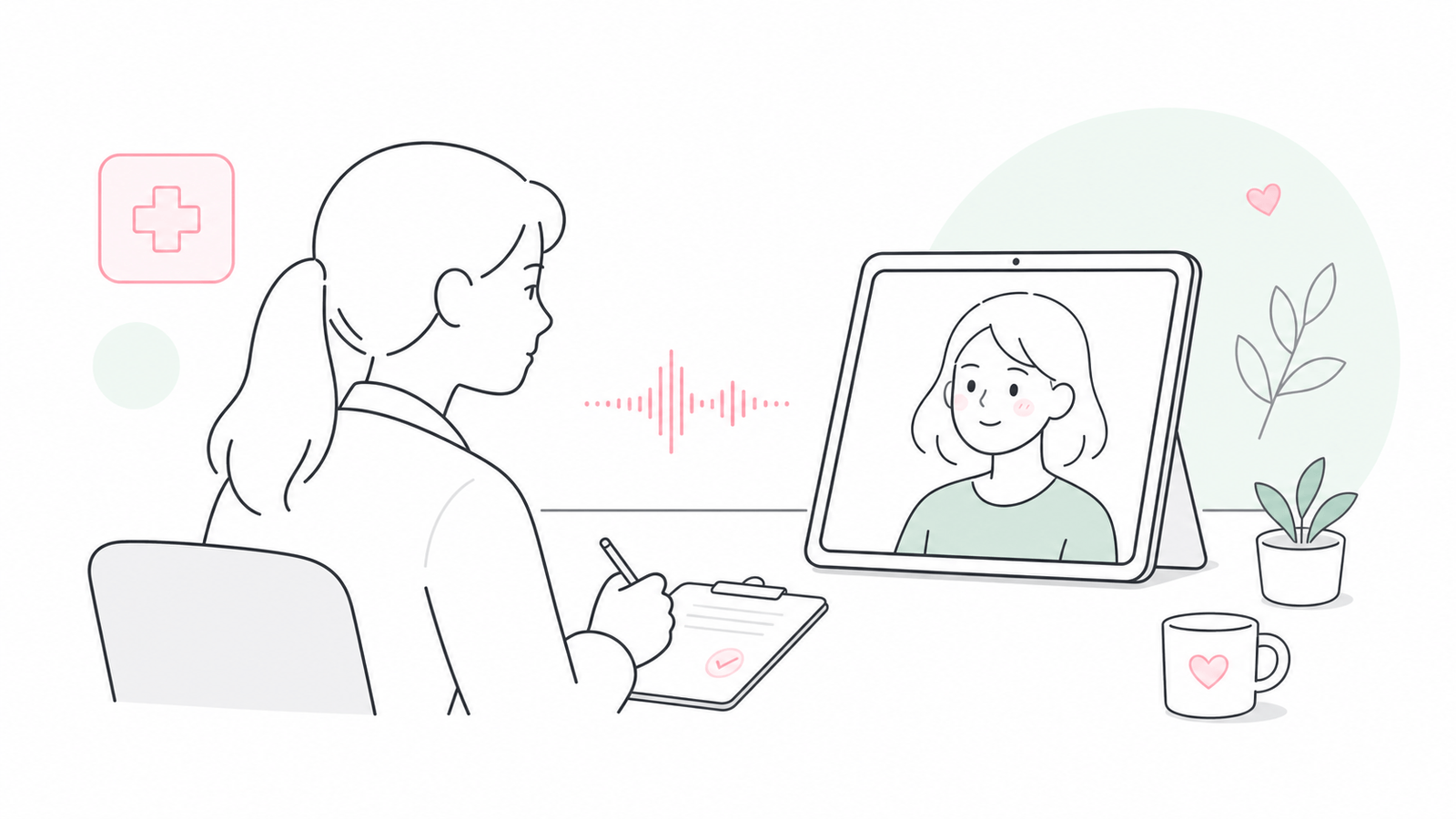
We are designing and developing a voice-based AI Virtual Patient system that allows medical students to practice psychiatric interviews at any time, without requiring a human partner.
- Simulate realistic psychiatric patient personas with coherent symptom profiles and emotional responses
- Support unstructured, naturalistic conversation that reflects the flow of real clinical interviews
- Provide a safe, low-stakes environment for developing empathy, active listening, and structured interviewing skills
- Enable repeated, on-demand practice beyond the constraints of scheduling human SPs
System Design
The system is built around a voice-based interaction loop using speech-to-text and text-to-speech pipelines, with an LLM-based conversational agent serving as the virtual patient. Each persona is grounded in clinically validated symptom frameworks, co-designed with psychiatrists to reflect realistic symptom presentations and behavioral patterns. The system manages turn-taking, hesitation, and emotional cues to simulate genuine patient affect, and is designed to support iterative practice with feedback mechanisms that help students reflect on their interviewing strategies.
Status
Currently in the design and early development phase, iteratively refined in close collaboration with clinical experts at Severance Hospital.